A large bedroom is a luxury, but it can also feel empty, unwelcoming, or hard to navigate if you don’t approach the layout intentionally. Without a plan, you end up with a bed floating in the middle of the room and bare walls that echo. The key to a successful large bedroom design is breaking the space into purposeful zones, using color and furniture strategically, and layering in lighting and texture that makes the room feel warm and lived-in. Whether you’re starting from scratch or reimagining an existing layout, these design ideas will help you create a bedroom that’s both functional and inviting, a true retreat that justifies every square foot.
Table of Contents
ToggleKey Takeaways
- Breaking a large bedroom design into purposeful zones—sleeping, lounge, and work areas—prevents empty spaces and creates an intentional, functional layout without permanent dividers.
- Anchor your bed against a solid wall and position seating at least 6-8 feet away to create distinct zones and shift between sleeping and relaxation mindsets.
- Choose a neutral color base with one or two consistent accent colors repeated across pillows, throws, and artwork to tie the room together without visual chaos.
- Use appropriately-scaled furniture that’s proportional to the room size, and distribute visual weight by balancing tall pieces (like headboards) with lower elements across different walls.
- Layer your lighting with ambient, task, and accent fixtures that can be controlled independently to create different moods and support activities like reading and dressing.
- Add texture through varied textiles, mixed materials (wood, metal, leather), patterns, and a blend of vintage and modern pieces to make the large bedroom feel warm, inviting, and lived-in.
Define Zones Within Your Space
The biggest mistake homeowners make with large bedrooms is treating them like one monolithic room. A 200+ square-foot bedroom can comfortably accommodate multiple activity zones: a sleeping area, a lounge or seating corner, and even a work nook or dressing space. Zoning isn’t about building walls or installing permanent dividers, it’s about using furniture placement, rugs, and subtle visual cues to define separate areas.
When you zone your bedroom, each area feels intentional and purposeful. A seating area in the corner opposite the bed becomes a reading nook or a spot to watch television. A low bookshelf or console table placed perpendicular to the wall can anchor a zone without blocking sightlines. Rugs are your secret weapon here: layering an area rug under your bed and another under a seating group defines those zones visually while keeping the overall aesthetic cohesive.
Create a Sleeping Area and Lounge Section
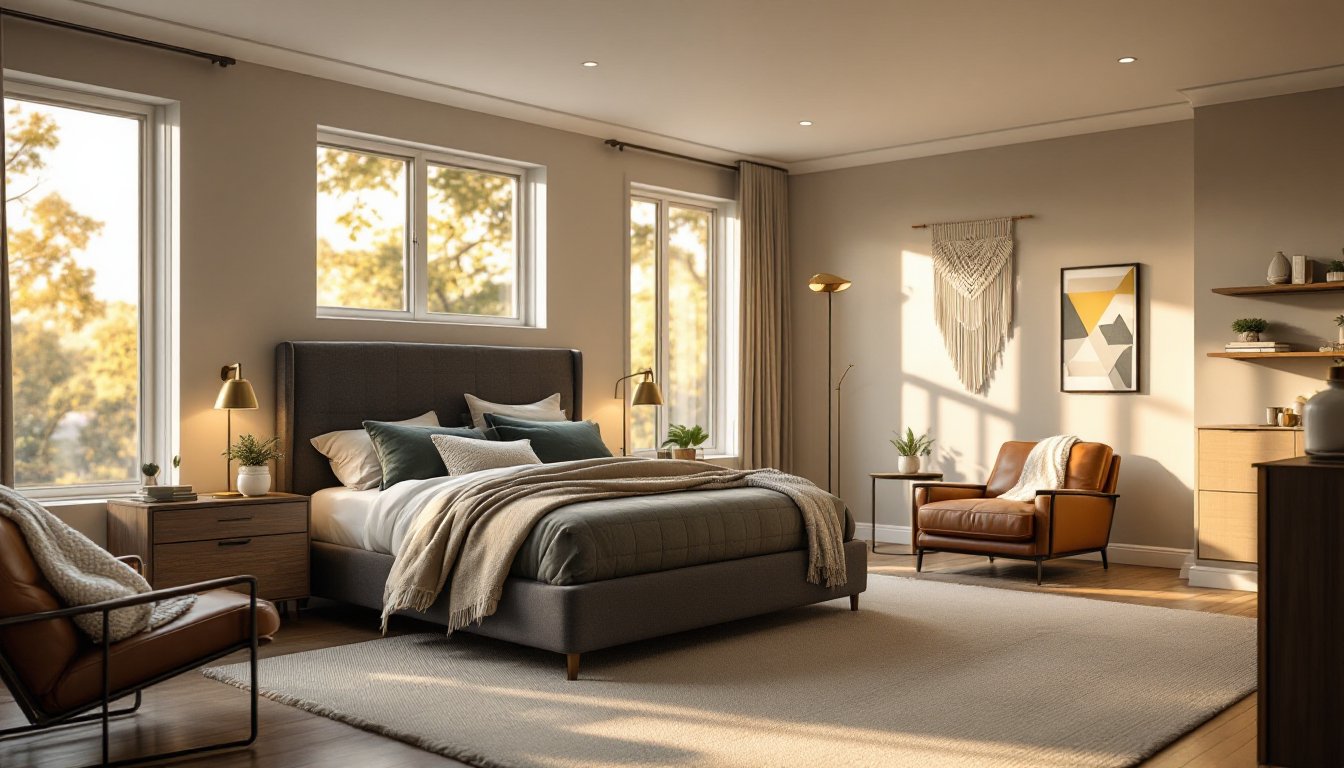
Your bed should be the focal point of the sleeping zone, but that doesn’t mean it has to dominate the entire room. Position your bed against a solid wall, usually the wall without windows, to anchor it. Flank the bed with matching nightstands and keep this area relatively quiet and calm in terms of visual clutter. A statement headboard (upholstered, wood slat, or floating shelving) reinforces that this is the sleeping zone.
In the remaining space, create a lounge section with a comfortable chair, ottoman, and small side table. A loveseat or sectional works if you have the footage. This seating area should feel separate from the bed, ideally at least 6 to 8 feet away, so you can shift your mindset when you move between sleeping and lounging. Hang artwork or add a mirror above the seating area to visually anchor that zone. According to interior design trends ideas, modern bedrooms increasingly blend sleeping quarters with functional relaxation spaces, especially in homes where the bedroom serves as a personal retreat.
Consider traffic flow as you zone: there should be a clear path from the door to the bed and to your lounge area without climbing over furniture. A wide walkway (at least 2 to 3 feet) around the perimeter makes the space feel larger and easier to navigate.
Choose the Right Color Palette
Color is the fastest way to either make a large bedroom feel cohesive or chaotic. In a spacious room, you have more flexibility than in a tiny guest room, but you still need restraint. A neutral base keeps the room calm and makes it feel larger: soft grays, warm whites, beiges, or soft taupe work beautifully. These aren’t boring: they’re the backdrop that lets you add personality through accent colors, textiles, and artwork.
Choose one or two accent colors and use them consistently across pillows, throws, artwork, and accessories. If your accent is a deep sage green, for instance, repeat it on a throw pillow, an accent wall, and perhaps a piece of art. This repetition ties the room together visually. Avoid the temptation to paint all four walls different colors, it fragments the space and reads as chaotic rather than thoughtful.
Lighting affects color perception dramatically in large bedrooms. A warm-white paint (like soft cream or greige) can look cold under cool-temperature bulbs and inviting under warm ones. Test your paint color by applying samples to your wall and observing how it looks at different times of day and under your planned lighting. Remember that large windows bring in a lot of natural light, which can make warm colors feel even warmer and cool colors feel clinical. Many interior design trends examples show that layered, monochromatic color schemes (light to dark shades of the same color) create visual depth and sophistication without overwhelming a room. If you’re hesitant about bold color, start with neutral walls and introduce color through bedding, art, and soft furnishings that you can change later.
Furniture Placement for Flow and Function
Large bedrooms demand furniture that’s proportional to the space. A twin bed in a 200-square-foot room looks lost: a queen or king bed anchors the space properly. Likewise, your nightstands, dresser, and any other case pieces should be substantial enough to hold their own visually. Floating furniture in the middle of the room is sometimes necessary, but whenever possible, anchor pieces to the walls to maximize open floor area and make the room feel organized.
The golden rule of furniture placement is creating clear sightlines. When you open the door and look into the room, you should see the bed (the focal point) and feel an invitation to move through the space. Avoid blocking windows or creating traffic jams around the furniture. If you need a seating area, position it perpendicular to the bed rather than directly opposite, this creates distinct zones without making the room feel divided.
Balance Scale and Proportion
Scale is about matching furniture size to room size. A bedroom that’s 12 × 18 feet can support a larger dresser, a generous nightstand, and a sizable seating area without feeling cramped. Conversely, a spindly desk or a tiny chair looks diminished in a large room. When shopping for furniture, consider the room’s dimensions and the piece’s dimensions side by side. A sofa that’s 90 inches wide might overwhelm a smaller bedroom but disappear in a sprawling master suite.
Proportion also means balancing visual weight. Don’t cluster all your heavy, dark furniture on one wall and leave the opposite side bare. Distribute tall and low pieces across the room. A tall dresser on one wall pairs well with lower bookcases or a console on another wall. If your bed has a tall, upholstered headboard, balance it with artwork or a mirror of similar scale elsewhere in the room.
One practical approach is the 60-30-10 rule adapted for furniture: 60% of your furniture should be at a standard height (nightstands, dressers), 30% should be taller (headboard, armoires, artwork), and 10% should be accent pieces or smaller items. This distributes visual interest without overwhelming the eye. Resources like Homedit offer detailed guides on arranging large bedroom furniture to create functional, visually balanced layouts.
Lighting Design to Set the Mood
A single overhead fixture is insufficient in a large bedroom. You need layered lighting: ambient, task, and accent lights that you can control independently to create different moods. Ambient lighting (your main source) should be dimmable so you can adjust brightness from bright-and-alert to soft-and-relaxing. A dimmer switch on your overhead fixture or a combination of overhead and wall sconces gives you flexibility.
Task lighting supports specific activities: reading in bed, getting dressed at the dresser, or working at a desk. Bedside table lamps with three-way bulbs let you adjust brightness for reading or sleeping. A mirror with integrated lighting above your dresser is practical for grooming. If you have a seating area, a floor lamp beside a chair provides reading light without requiring overhead brightness.
Accent lighting, wall sconces, strip lighting behind floating shelves, or even a simple night light, adds warmth and visual interest. Sconces on either side of the bed create a finished, hotel-like look while providing localized light. Color temperature matters: warm white (2700K) feels intimate and restful, while cool white (4000K+) is more energizing. For a bedroom, stick with warm white in most fixtures. Consider layering lighting across different areas of the room so the entire space doesn’t feel equally bright. A well-lit reading corner doesn’t require the bed to be brightly lit, and vice versa. Testing with smart bulbs or flexible fixtures before committing to hardwired sconces lets you experiment without the cost of rewiring.
Add Texture and Layering for Depth
A large, plainly decorated bedroom can feel sterile. Texture, the visual and tactile variety in your furnishings and finishes, makes the space feel inviting and rich. Layer different textures across your bed (linen sheets, a quilted throw, velvet pillows), your seating (a smooth leather chair with a chunky knit throw), and your flooring (hardwood with a plush area rug).
Textiles are your primary tool here. Beyond bedding, use curtains or drapes that have weight and texture, linen, velvet, or a woven blend, rather than thin sheers that disappear. Multiple layers of pillows in different fabrics (cotton, linen, leather, faux fur) create visual and tactile interest. A woven wall hanging or macramé adds organic texture without cluttering the space.
Materials beyond textiles contribute too. A wooden headboard, a concrete or marble nightstand, metal-frame lamps, and natural wood furniture create subtle contrast. According to design inspiration at Freshome, mixing material finishes, matte, gloss, and natural wood, prevents a room from feeling one-note or flat. Don’t shy away from pattern either: a geometric throw pillow, a striped curtain, or a patterned area rug adds visual rhythm. Just keep patterns cohesive by sticking to a limited color palette: mixing three different color schemes in patterns reads as chaotic rather than layered.
Layering also means mixing old and new, high and low. A vintage dresser paired with a modern nightstand, or affordable curtains paired with a splurge-worthy bed frame, creates a curated, lived-in feel rather than a showroom look. Plants, books, and artwork contribute to layering too, they’re the final texture that makes the space feel genuine and personal.