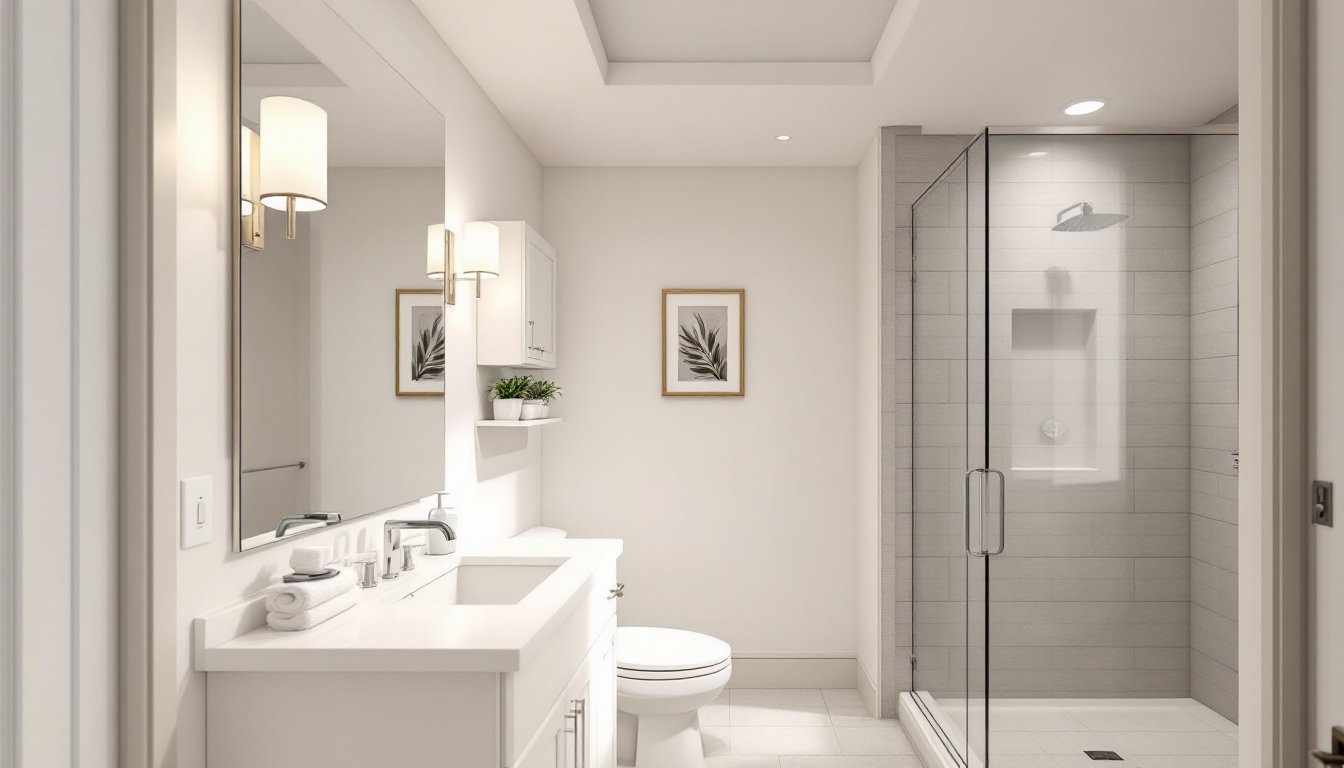
A 5×7 bathroom is tight, roughly 35 square feet, and that constraint forces real thinking. There’s no room for bulky vanities, sprawling layouts, or wasted inches. Yet this footprint is also honest. Every choice matters. Whether you’re renovating an older home or optimizing a condo, a well-designed 5×7 bathroom proves that small spaces don’t mean small living. The key is working within the dimensions, not against them, and choosing finishes and fixtures that earn their place. The following ideas address storage, color, light, fixtures, and finishing touches so your small bathroom feels intentional, functional, and genuinely good to use every day.
Table of Contents
ToggleKey Takeaways
- Maximize vertical storage with wall-mounted cabinets, floating vanities, and over-the-toilet shelving to keep floor space clear and make your 5×7 bathroom feel larger and more functional.
- Use a cohesive light, neutral color palette—soft whites, pale grays, or warm beiges—with large-format tiles and minimal patterns to visually expand the space without overwhelming it.
- Layer three types of lighting (recessed fixtures, task sconces, and natural light) to eliminate shadows and brighten every corner of your compact bathroom design.
- Select fixtures strategically by centering the toilet for optimal clearance, choosing a 30–36-inch vanity with wall-mounted faucets, and opting for frameless glass shower doors to minimize visual bulk.
- Keep decor functional and minimal by choosing meaningful pieces like heated towel racks and large mirrors that reflect light, while avoiding purely decorative clutter in tight spaces.
- Know when to DIY (painting, shelving, tile) versus when to hire professionals for plumbing, electrical, and structural work to ensure code compliance and avoid costly mistakes.
Maximize Vertical Space With Smart Storage Solutions
When floor space is precious, go up. Tall, wall-mounted cabinets pull double duty, they store towels, toiletries, and cleaning supplies while keeping the floor clear. A recessed medicine cabinet tucked into a wall cavity saves at least 4 inches of depth compared to surface-mounted versions: it also sits flush, so there’s nothing to bump your elbows on.
Consider a floating vanity (typically 18–24 inches deep) instead of a traditional pedestal sink. A floating vanity with undersink storage opens the floor visually, making the room feel larger, and creates hidden space for baskets or supplies. Install shelves above the toilet or beside the mirror: even a 6-inch-deep shelf running the length of the wall stashes decades’ worth of extra toilet paper and soap.
For bathrooms without much wall space, vertical towel racks, ladder shelves, or corner cabinets claim otherwise dead corners. A tall, narrow over-the-toilet cabinet (typically 26–30 inches wide) slides into that awkward gap and holds everything from cleaning tools to rolled towels. The rule: Use every inch from floor to ceiling. Skip floor-based storage, hampers, trash cans, shelving, unless it’s built-in or absolutely minimal. Every item on the floor shrinks perceived space.
Choose A Cohesive Color Palette For Visual Expansion
Color is psychology. Light, neutral palettes, soft whites, pale grays, warm beiges, reflect light and bounce it around the room, tricking the eye into thinking the space is bigger than it is. If you want personality without cramping the feel, layer in one or two accent colors through paint, tile, or accessories: just keep 60–70% of the walls and larger fixtures in a light, unified tone.
Mono-color schemes work especially well here. Paint walls, trim, and ceiling the same or very close shades so there are no visual breaks that chop up the room. A 5×7 space with a bright white ceiling and lighter walls reads as taller and more open. If you prefer warmth, soft grays or warm whites (like sherwin-williams alabaster or Benjamin Moore cloud white) maintain that openness while feeling less sterile.
Tile choices matter too. Large-format tiles (12×24 or larger) with fewer grout lines create visual continuity, especially if you carry the same tile or similar color across floor and shower surround. Avoid small, heavily patterned tiles, they fragment the space. When looking at Interior Design Trends Examples, notice how successful small bathrooms stick to two or three colors max. Reserve bold color for a single accent wall or small pops in towels and decor, which are easy to swap if tastes change.
Install Proper Lighting To Brighten The Space
Lighting transforms small bathrooms. A single overhead fixture leaves dark corners and shadows: layer three types of light instead. Start with recessed lights (typically 4-inch or 6-inch fixtures) positioned above the vanity and throughout the ceiling to wash the room in ambient light. Pair that with a sconce or two on either side of the mirror at 36–40 inches above the counter for even, shadow-free task lighting when grooming.
Natural light counts, too. If there’s a window or skylight, keep it clear or use a frosted or textured privacy film so light flows in without compromising privacy. Skylights are especially valuable in dark bathrooms: a single 2×2-foot skylight floods a 5×7 room with daylight.
Color temperature matters: use warm white (2700K) for a welcoming feel, or neutral white (3000K) if you prefer clarity. Avoid cool whites (4000K+) in bathrooms: they feel clinical and don’t show skin tones kindly. Budget approximately $150–500 for basic recessed and sconce lighting, depending on fixture type and whether you’re hiring an electrician. If you’re DIY-comfortable with wiring, recessed lights aren’t difficult: sconces require routing power, which might call for a licensed electrician depending on local code.
Select Fixtures And Layouts That Work For Small Spaces
Fixture selection is critical in compact bathrooms. A standard 30-inch vanity fits comfortably: 36 inches is ideal if you have the depth (typically 18–22 inches). Wall-mounted faucets save a few inches compared to deck-mounted ones, and they’re easier to clean around.
Toilet placement dictates the whole layout. To meet building codes, you’ll need at least 15 inches of clearance from the center of the toilet to a side wall, and typically 21 inches of clear floor space in front. These aren’t optional, they’re mandated by the International Residential Code (IRC), which most jurisdictions follow. A corner toilet wastes that 15-inch clearance zone: centering the toilet on the wall maximizes usable floor space on either side.
Shower dimensions depend on available wall space. A 36×36-inch corner shower is tight but doable: 42×42 inches feels more comfortable. A shower-tub combo saves space if you want both, though a shower-only layout opens up the room. Frameless glass shower doors look less bulky than framed alternatives and maintain visual continuity. Consider a corner sink or wall-mounted sink to free up floor space compared to a full vanity: you’ll lose some storage but gain openness. Remodelista and similar design sites show how small bathrooms benefit from corner fixtures and minimal visual clutter.
Incorporate Functional Decor And Finishing Touches
In a small bathroom, every object must justify its presence. Skip purely decorative items: instead, choose pieces that work. Towel bars, hooks, and rings are decor and function. A heated towel rack warms towels while keeping them off the floor. Wall art, a single, meaningful print in a simple frame, adds personality without clutter. Keep it minimal: one or two small pieces at most.
Mirrors are your friend. A large mirror above the vanity (ideally spanning most of the wall width) reflects light and creates the illusion of depth. A second mirror or reflective surface opposite a light source bounces light around further. Avoid too many mirrors, though, it gets disorienting.
Flooring sets tone and durability. Porcelain tile is standard (it’s water-resistant and durable): 12×12 or 18×18-inch tiles work well. Grout color matters: light grout with light tile appears more seamless: dark grout creates definition. Budget $3–8 per square foot for mid-range porcelain tile, plus installation. Avoid small mosaic tiles in small bathrooms, visually they chop things up. Textured finishes prevent slips but show dirt: high-gloss is sleek but slippery. Matte or satin finishes strike a balance. A 5×7 bathroom photo collection on Houzz reveals how successful small bathrooms layer textures without pattern overload.
Renovation Tips For DIY Projects And Professional Help
Some 5×7 bathroom work is DIY-friendly: some isn’t. Painting, installing shelves, swapping fixtures, and laying simple tile are achievable for comfortable DIYers. Plumbing relocation, electrical rewiring, and structural changes (moving walls, installing vents) require licensed professionals and permits.
Before starting, pull a permit if you’re changing fixtures, rerouting plumbing, or modifying vents, codes vary by jurisdiction, but most require permits for wet-area work. Skipping permits risks fines and complications at resale. A plumber or electrician consultation (typically $75–150) clarifies what’s code-compliant in your area and what requires licensed work.
DIY tasks like painting, caulking, and installing floating shelves save hundreds. Avoid DIY plumbing unless you’re experienced: a single leak in a small, enclosed bathroom causes mold and rots framing fast. Similarly, electrical work (beyond replacing fixtures on existing circuits) should go to a licensed electrician. When planning your timeline and budget, assume home renovation ideas in bathrooms take 2–4 weeks, depending on scope. Material costs run $1,500–$4,000 for a modest refresh (paint, fixtures, flooring): professional labor adds another 30–50% to the total. Don’t underestimate prep, removing old fixtures, prepping surfaces, and planning layout often take as long as installation.
Conclusion
A 5×7 bathroom doesn’t demand compromise, it demands strategy. Go vertical with storage, stick to light, unified colors, layer your lighting, choose fixtures scaled to the space, and keep decor functional. Know when to DIY and when to call a pro. The result is a bathroom that feels intentional, efficient, and even luxurious even though its size. Smart design transforms tight footprints into some of the most used and loved rooms in a home.