A country kitchen isn’t about roughing it, it’s about creating warmth, functionality, and timeless charm in the heart of your home. Whether you’re drawn to the slow simplicity of farmhouse life or just crave a kitchen that feels lived-in and inviting, country design delivers authentic character without requiring you to sacrifice modern conveniences. If you’re planning a kitchen renovation or a refresh, understanding the core elements of country kitchen design ideas will help you make choices that feel cohesive and genuine. From cabinetry and flooring to lighting and backsplash, this guide walks you through the specific materials, colors, and details that define the style, so you can build a space that’s both beautiful and functional.
Table of Contents
ToggleKey Takeaways
- Country kitchen design ideas prioritize warm, earthy color palettes like soft creams, sage greens, and muted blues that create a cozy, authentic atmosphere without feeling trendy or clinical.
- Raised-panel cabinetry in natural wood species like oak, hickory, or knotty pine, paired with wrought iron hardware and open shelving, forms the backbone of authentic country style.
- Natural stone, wide-plank hardwood, and rustic tile flooring with warm grout develop patina over time, delivering durability and timeless character that improves with age.
- Warm LED lighting (2700–3000K) in fixtures like wrought iron chandeliers and pendant lights, combined with Edison bulbs and under-cabinet strips, creates the cozy ambiance essential to country kitchens.
- Subway tile, hand-painted backsplash, beadboard, or stone wall treatments add texture and personality while open shelving displays curated dishware and vintage pieces that signal a kitchen evolved naturally over time.
- Mixing closed and open storage, paired with intentional displays of bowls, cookbooks, and enamelware, prevents the space from feeling like a museum while maintaining the warm, lived-in aesthetic that defines country kitchen authenticity.
Classic Color Palettes for a Cozy Country Feel
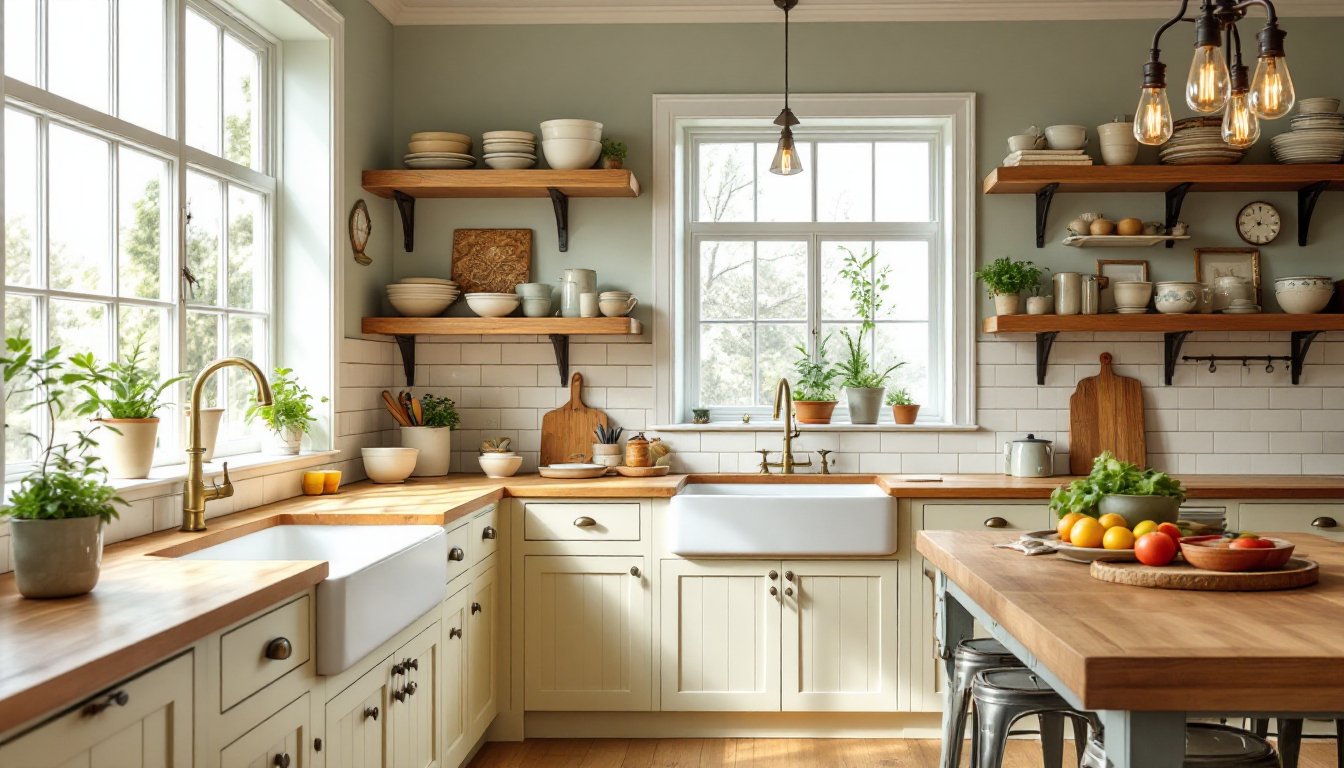
Country kitchens thrive on warm, earthy tones that ground the space and invite you to linger. Think soft creams, warm whites, soft sage greens, and muted blues that echo sky and shutters on a farmhouse.
The traditional palette pairs a neutral base, usually cream or warm white on walls and cabinetry, with one or two accent colors in muted earth tones. Soft greens work especially well alongside white cabinetry, while dusty blues bring a subtle cottage aesthetic without feeling trendy. Avoid stark white (which feels clinical) and neon or saturated colors (which clash with country authenticity).
For a deeper country feel, consider soft terracotta, warm taupe, or weathered grays. These colors age beautifully and develop patina that feels naturally rustic. Pair them with white open shelving or cream cabinetry to prevent the room from feeling heavy. Accent colors, often pulled from natural materials like wood or stone, should feel like they belong to the landscape, not a paint strip.
When applying color, remember that interior design trends evolve, but country’s warmth endures. Test paint samples on your walls under different lighting (natural, morning, evening) before committing. Colors shift dramatically depending on light direction and intensity, and a lovely sage can turn muddy in the wrong conditions.
Cabinet Styles and Materials That Define Country Kitchens
Cabinet design is the backbone of a country kitchen. Look for recessed or raised-panel doors, flat, modern slab doors won’t deliver the period character you’re after. Raised-panel doors have a beveled center panel that adds depth and shadow, creating visual interest even in a simple cream finish.
Wood species matter too. Oak (often quarter-sawn for prominent grain), hickory, maple, and pine are traditional country choices. Knotty pine brings authentic farmhouse warmth and develops character over time. If budget is tight, painted cabinetry (usually cream, soft white, or muted blue) can mimic vintage furniture and costs less than stained wood.
The layout itself should feel approachable. Floor cabinets with simple hardware, wrought iron pulls or brushed brass knobs, invite you to grab what you need without fuss. Cabinet height matters: shorter cabinets (30 to 36 inches) paired with open shelving above feel more cottage-like than wall-to-wall tall cabinetry. Mix closed and open storage, which softens the rigid look of all-cabinet walls and showcases your dishware or cookbooks.
Don’t overlook the interior finish. Many country kitchens feature cabinet interiors painted in contrasting colors (soft blues, greens, or warm whites) so the shelves visible behind glass doors become part of the design. If you’re refinishing existing cabinets, primer and quality paint ($30–$60 per gallon, depending on brand) will refresh them without replacement cost. Best home renovation ideas often start with cabinetry, since it consumes the largest budget and sets the tone for everything else.
Flooring Options That Complement Rural Aesthetics
Flooring anchors the country kitchen visually and functionally. Stone, hardwood, and tile all work, but the finish and pattern matter enormously.
Natural stone, slate, limestone, or sandstone, delivers authentic country character with uneven surfaces that wear beautifully over time. Slate in soft grays, warm browns, or mottled multi-colors feels durable and timeless. Limestone is softer and more porous, so it requires regular sealing (annually, depending on foot traffic) to resist staining. Both are expensive ($8–$15+ per square foot installed) but develop a patina that looks increasingly authentic with age.
Hardwood, ideally in wider planks (5 to 8 inches) and softer species like pine or oak, evokes farmhouse authenticity. The natural grain variation and subtle color shifts create visual warmth. Wide-plank options run $6–$12+ per square foot installed. Factor in finish durability: satin finishes hide footprints better than glossy, and matte finishes feel more rural than shiny.
Tile is practical, budget-friendly ($2–$8 per square foot), and forgiving in a working kitchen. Look for hand-painted or rustic glazed tiles in earth tones, or terra cotta with subtle color variation. Avoid perfectly uniform, high-gloss tile, it reads modern, not country. Grout color matters: warm, slightly rustic grout blends better than bright white, which emphasizes seams.
Whatever you choose, ensure proper underlayment and subfloor preparation. Moisture underneath tile or stone invites mold and failure. Home renovation ideas rooted in solid prep work last decades longer than shortcuts.
Lighting Fixtures and Hardware for Authentic Country Character
Lighting shapes the mood and authenticity of a country kitchen. Overhead fixtures should feel substantial and approachable, not sleek or minimal. Wrought iron chandeliers, simple lantern-style pendants, and dome fixtures in bronze, black, or aged brass all fit the vernacular.
Pendant lights hung over an island or sink become focal points. Choose styles with glass, metal, or even fabric shades, avoid clear, ultra-modern silhouettes. Spacing matters: typically 28 to 30 inches above the countertop and 12 inches apart from center to center if using multiples. That’s standard, but you can adjust based on your ceiling height and fixture size.
Under-cabinet lighting shouldn’t be the cold LED strips: warm-toned LED strips (2700–3000K color temperature) mimic soft incandescent glow. Edison bulbs in exposed fixtures bring cozy authenticity, though they’re less efficient than LEDs. Most fixtures can accommodate dimmable warm LEDs without replacement.
Hardware, pulls, knobs, and hinges, telegraphs the design instantly. Wrought iron, cast bronze, brushed brass, and pewter feel country. Avoid polished chrome or contemporary stainless, which shatter the mood. Cup pulls (semi-circular handles) and bin pulls (simple rectangular loops) are classic country choices. Hardware runs $2–$10 per piece: expect 20+ pieces for a standard kitchen, so budget $40–$200 for this detail.
Incandescent and warm LED fixtures together cost $300–$1,500 depending on complexity. Don’t skimp here, lighting is visible every hour you spend in the kitchen.
Backsplash and Wall Treatments for Farmhouse Appeal
The backsplash is your chance to inject texture, color, and personality without overwhelming the space. Subway tile, the classic 3-by-6-inch rectangle, arranged in running bond (brick pattern) feels authentically cottage-like, especially in cream, soft white, or light gray. Off-white grout softens the grid and prevents a too-modern appearance.
Hand-painted tiles, often sourced from artisans or imported brands, bring individual character. Delft blue, soft florals, or simple geometric patterns add story without feeling precious. Mix plain tiles with patterned ones to balance visual weight. Budget $10–$30 per tile for hand-painted work: a typical backsplash (30 square feet) costs $300–$900 just for materials.
Beadboard, vertical planks with a groove running the length, is a quintessential country detail. Paint it cream or soft white and pair it with tile or stone counters. Installation requires careful studs and trim, but it’s achievable for DIY enthusiasts with basic carpentry skills. Pre-made beadboard panels ($30–$60 per 4-by-8-foot sheet) speed the process.
Shiplap, currently popular but still country-appropriate, works similarly to beadboard and costs $40–$80 per 8-foot board. Painted finish is key: stained shiplap often reads too rustic or contemporary-farmhouse rather than classic country.
Stone (slate, limestone, or stacked brick) delivers texture and durability. Irregular surfaces catch light beautifully and hide imperfections. Stone backsplashes run $15–$30+ per square foot and typically require professional installation. Wall treatments like interior design trends ideas sometimes feature mixed materials, tile lower, open shelving with beadboard backing upper, that layered approach feels intentional and inviting.
Open Shelving and Storage Solutions That Showcase Charm
Open shelving is country kitchen gold. It displays your everyday dishes, glassware, and cookbooks while keeping the space feeling airy instead of closed off by cabinetry.
Shelf material and support matter. Solid wood shelves (1.5 to 2 inches thick) in pine, oak, or walnut look handmade and substantial. Floating shelves work if anchored to studs with heavy-duty brackets: plan for brackets every 24 to 32 inches depending on load. For painted finishes, simple wooden shelves in white or cream cost $30–$100 per shelf depending on length and material. Wrought iron or aged brass brackets add character: expect $20–$50 per bracket pair.
What you display shapes the entire aesthetic. Stack bowls and plates by color or size. Display vintage crockery, mason jars, or enamelware. Group items in threes or odd numbers, it’s visually pleasing and deliberately arranged. Cookbooks with fabric spines or vintage covers contribute to the story. Add a small potted herb or fresh flowers for life.
But, not everything should be open. Pair open shelving with closed cabinetry for cooking essentials, pantry overflow, and less-photogenic items. A mix prevents the kitchen from feeling like a museum display or cluttered. Closed lower storage keeps your foot traffic zone uncluttered: open shelving 3 to 4 feet above counters feels accessible and intentional.
Incorporate a vintage cabinet, a repurposed dresser, or a standing hutch if space allows. These pieces add character beyond built-in cabinetry and signal that your kitchen evolved over time, true country homes rarely have matching sets. According to design resources like Remodelista, layered storage and curated display are hallmarks of farmhouse spaces that feel authentic rather than staged.
Conclusion
Building a country kitchen means honoring tradition while prioritizing function. Focus on authentic materials, real wood, natural stone, quality tile, rather than shortcuts that mimic the look. Warm color palettes, recessed-panel cabinetry, and mixed open and closed storage create cohesion. Lighting, hardware, and backsplash details finish the space with genuine character. Start with the elements that matter most to your lifestyle, invest in those, and layer in smaller details over time. A country kitchen shouldn’t feel like a museum piece: it should feel like home, built to be lived in and loved for decades.