Black kitchens are no longer a risky design choice, they’re a deliberate statement of sophistication and modernity. Whether it’s matte cabinetry, sleek black hardware, or dark countertops, black kitchen design ideas are reshaping how homeowners approach this central living space. The shift away from light, cookie-cutter kitchens toward bold, dramatic aesthetics reflects a broader confidence in interior design. A well-executed black kitchen doesn’t feel cramped or gloomy: instead, it becomes a striking focal point that commands respect and showcases thoughtful planning. This guide walks through practical strategies to pull off black kitchen design successfully, from cabinet selection and installation to lighting solutions and color balancing, so your space looks intentional, not like a mistake.
Table of Contents
ToggleKey Takeaways
- Black kitchen design ideas signal sophistication and modernity while hiding fingerprints and dust better than lighter finishes, making them both visually striking and practically low-maintenance.
- Matte and satin black cabinet finishes are ideal for DIY projects, requiring proper preparation, bonding primer, and two to three coats of premium cabinet-grade paint for best results.
- Light countertops in white, gray, or cream create essential visual contrast with black cabinetry and prevent the space from feeling cramped or cave-like.
- Layered lighting with recessed overhead fixtures, under-cabinet task lighting, and pendant lights is non-negotiable in black kitchens to prevent darkness and create visual interest.
- Warm wood tones, metallics, textiles, and accent colors break up black monochromatic spaces and add richness without sacrificing the sophisticated aesthetic.
- Black kitchen design adapts successfully to all layouts—from galley kitchens to island designs—when paired with strategic lighting, appropriate countertops, and thoughtful color balance.
Why Black Kitchens Are Having a Major Moment
The Psychology of Dark Kitchens
Black absorbs light and creates visual depth, making kitchens feel grounded and intentional rather than sterile. Unlike the mass-produced white kitchen aesthetic of the 2000s and 2010s, black kitchens signal that a homeowner has made a deliberate design choice. Psychologically, dark spaces feel more intimate and luxurious, think high-end restaurants, upscale hotels, and designer showrooms. When executed properly, black kitchens actually make spaces feel larger because the dark backdrop allows other elements (lighting, countertops, hardware) to pop and draw the eye, creating visual interest instead of monotony.
The trend also reflects a practical shift: darker finishes hide fingerprints, dust, and minor wear better than lighter alternatives, making maintenance less of a daily headache. Homeowners tired of constant wiping and spotting are turning to black cabinetry as a sensible choice, not just a trendy one. Also, black pairs with nearly every aesthetic, modern minimalist, industrial, farmhouse, or transitional, giving designers and DIYers flexibility that neutral tones often can’t match.
Interior design trends ideas are embracing darker palettes across all room types, and kitchens are leading that charge. The shift reflects confidence that bold color choices improve home value and personal satisfaction.
Black Cabinets: Styles and Installation Tips
Black cabinetry comes in several finishes, each with distinct characteristics. Matte black (also called flat black) is the most forgiving: it hides dust and fingerprints exceptionally well and reads as contemporary or minimalist. Semi-gloss or satin black offers a subtle sheen that catches light and feels more refined, though it requires more frequent cleaning. Gloss black is dramatic but demands meticulous care, every fingerprint and dust particle shows. For a DIY kitchen renovation, matte or satin finishes are the practical choice.
If you’re painting existing cabinets, preparation is non-negotiable. Remove all doors and hardware, then sand the surfaces with 120- to 150-grit sandpaper to dull any existing finish. Fill gaps and imperfections with wood filler, sand again, and apply a quality bonding primer (Benjamin Moore Advance or similar) designed for cabinetry. Two coats of premium cabinet-grade black paint (acrylic latex or hybrid) typically provide adequate coverage, though a third coat may be needed for depth. Allow 24 hours between coats and at least 72 hours before rehanging doors.
For pre-made black cabinets, installation follows standard cabinetry practices: check for level and plumb, use shims to correct minor misalignments, and secure to studs with 3-inch wood screws. Most residential kitchen cabinets are 34.5 inches tall (finished height with countertop is 36 inches), so verify your space before ordering. If you’re unsure about electrical or structural concerns, consult a professional, cabinet placement affects outlet accessibility and weight distribution on walls.
Pairing Black Cabinets With Countertops and Backsplashes
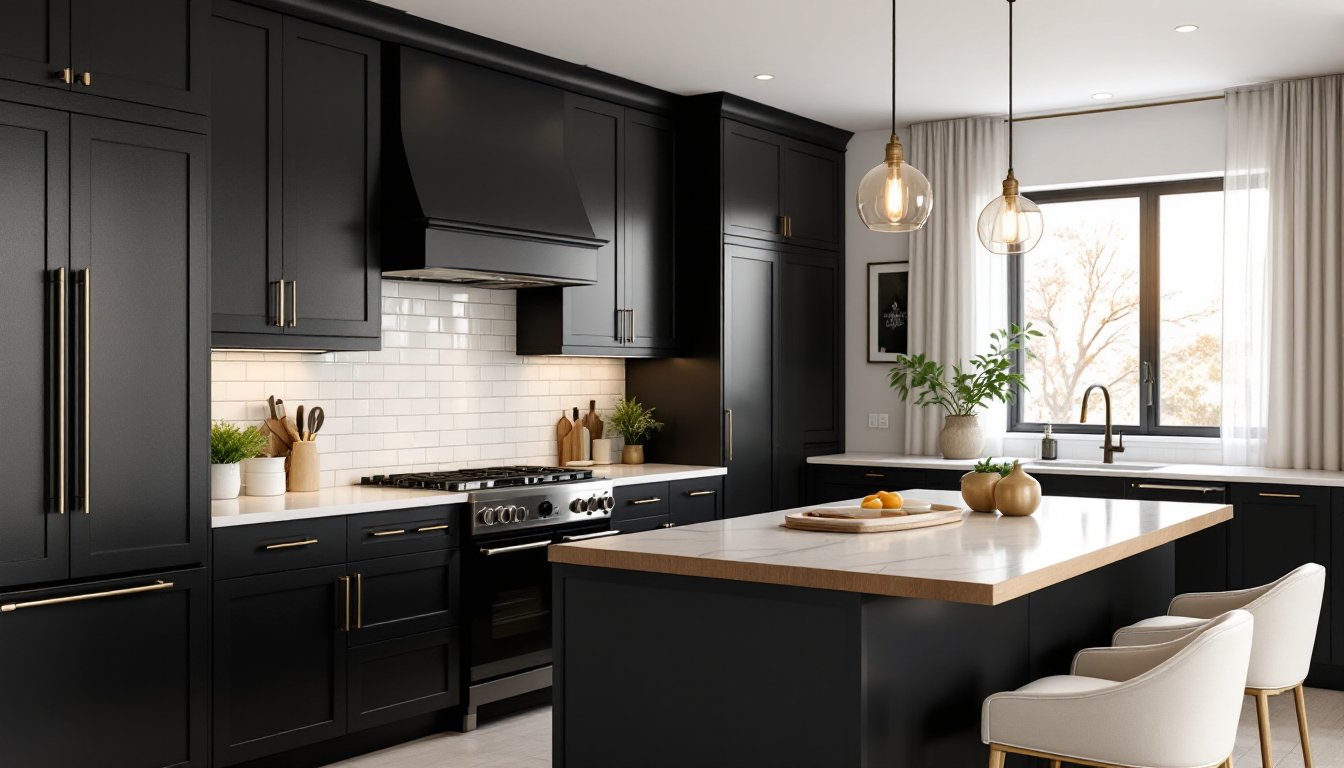
Countertop material and color make or break a black kitchen’s visual balance. Marble, quartz, or granite in white, gray, or cream tones create stark contrast that feels high-end and clean. Light countertops also brighten the space, preventing the kitchen from feeling cave-like. Alternatively, deep charcoal or black countertops paired with black cabinets create a moody, unified aesthetic, but this approach requires excellent lighting and accent colors to avoid feeling one-dimensional.
Backsplash choices set the mood and hide stains. Subway tile in white or light gray is a safe, classic pairing that echoes traditional kitchens but grounds black cabinetry. For a contemporary edge, consider mosaic tile, glass tile, or even a mix of materials that introduce texture and subtle color variation. A full-height backsplash, running from countertop to the underside of upper cabinets, creates a polished, intentional look and reduces the maintenance burden of painted drywall. Standard backsplash height is 18 inches: full-height typically runs 36 inches or more.
When selecting materials, remember that black kitchen design ideas should balance drama with livability. Matte finishes on backsplash and countertops (if not shiny stone) are forgiving and contemporary, while glossy tiles can feel slick if the kitchen lacks warm accents elsewhere.
Lighting Solutions for Black Kitchen Spaces
Lighting is non-negotiable in a black kitchen, without it, the space collapses into darkness and feels small. Plan for three layers: ambient lighting (overhead fixture or recessed lights), task lighting (under-cabinet or pendant lights over the island), and accent lighting (optional wall sconces or display lighting).
Recessed lighting (also called “can lights”) spaced 4 to 6 feet apart across the ceiling provides even, functional illumination. Use dimmable LED bulbs rated at 3000K to 4000K (warm-to-neutral white) to avoid harsh, clinical light. Standard recessed fixture size is 4 inches or 5 inches in diameter: 5-inch fixtures offer more light output and are ideal for kitchens with 9-foot or higher ceilings.
Under-cabinet lighting is essential for task areas like the prep zone. LED strips (stick-on or hardwired) are affordable and energy-efficient: they eliminate shadows and make the countertop workspace safer and more inviting. Hardwired options cost more but integrate seamlessly and are permanent.
Pendant lights over an island or breakfast bar add visual interest and warmth. Brass, copper, or matte black metal finishes pair naturally with black cabinetry. Hang pendants 12 to 18 inches above the countertop and space them 24 to 30 inches apart for balanced illumination. Avoid hanging them too low, traffic flow and sight lines matter.
Don’t overlook window treatments: sheer or translucent materials allow natural light to enter while maintaining privacy. Black kitchens benefit enormously from daylight.
Balancing Black With Color: Accent Ideas and Material Choices
Pure black everywhere is monotonous. Introduce accent colors and materials to create visual rhythm and prevent the kitchen from feeling heavy. Warm wood tones (natural oak, walnut, or open shelving with wood backing) add richness and break up black cabinetry. A wood-topped island with black base or black cabinets paired with a wood feature wall create balance and warmth.
Metallics, brass, copper, stainless steel, or matte black hardware, add shimmer without introducing new colors. Cabinet knobs and pulls are high-impact, affordable upgrades. Swap standard handles for cup pulls, ring pulls, or bar handles in complementary finishes to refresh the look without full cabinet replacement.
Textiles and soft furnishings matter too: bar stools with upholstered seats in cream, gray, or even a muted sage soften black cabinetry. A colorful area rug or woven runner adds personality and defines the kitchen zone in open-concept homes. According to Interior Design Trends Examples, layering textures, matte, glossy, smooth, woven, creates depth in monochromatic spaces.
Paint an accent wall in a complementary color: charcoal gray, deep navy, or even a muted terracotta if you’re feeling adventurous. One accent wall prevents the space from feeling flat while keeping maintenance and cost low. Finally, plants and fresh greenery in the kitchen add life and soften hard lines. A potted herb garden on open shelving or windowsill ties function and beauty together.
Black Kitchen Layouts for Different Home Types
Black kitchen design adapts to various home types and layouts. Galley kitchens (narrow, parallel counters) benefit from black cabinetry because the dark finish makes walls feel less oppressive than white: pair it with white or light countertops and excellent lighting to prevent the corridor effect. Island kitchens in open-concept homes showcase black cabinetry beautifully: the island becomes a sculptural element that anchors the space visually.
Apartment and condo kitchens often have limited wall space and lower ceilings. Black works well here if lighting is strategic, recessed lights and under-cabinet strips prevent a bunker-like feeling. Larger suburban kitchens with high ceilings and generous counter space can handle black more boldly: consider an all-black lower cabinet run with white upper cabinets, or black cabinetry paired with a dramatic stone backsplash.
Regardless of layout, workflow matters. Keep the work triangle (sink, stove, refrigerator) efficient: black cabinetry doesn’t change functional needs, only aesthetics. When planning modifications, ensure that home renovation ideas examples address both beauty and usability. If relocating appliances or plumbing, hire a licensed plumber or electrician to handle rough-in work, many jurisdictions require permits for substantial renovations.