Coastal kitchen design ideas are having a major moment as homeowners seek spaces that feel light, airy, and connected to nature. Whether you live by the ocean or miles inland, a coastal kitchen brings that relaxed seaside vibe into your home. This design style isn’t about nautical clichés, it’s about clean lines, natural materials, and a color palette that whispers rather than shouts. In this guide, we’ll walk you through the core principles, material choices, and practical updates that turn an ordinary kitchen into a breezy coastal retreat.
Table of Contents
ToggleKey Takeaways
- Coastal kitchen design emphasizes natural light, unfinished wood, and openness to create a calm, clutter-free space that evokes a weathered beach cottage.
- A soft, warm white or cream color palette paired with subtle accent blues (seafoam, dusty denim, or sage-blue) forms the foundation of authentic coastal kitchen design ideas.
- Natural materials like reclaimed wood, marble or granite countertops, and simple white subway tile are essential to achieving genuine coastal appeal without high-gloss finishes.
- Hardware and lighting choices—brushed nickel, aged brass, pendant lights with linen shades, and oil-rubbed bronze finishes—complete the coastal aesthetic with weathered, understated elegance.
- Paint, hardware swaps, and textile updates offer budget-friendly coastal kitchen transformations, with cabinet painting and new pulls delivering maximum impact for $300–800.
- Layer your lighting approach with natural windows, organic overhead fixtures, and subtle under-cabinet LED strips to amplify the airy, uncluttered feeling coastal design requires.
Understanding Coastal Kitchen Design Principles
Coastal design starts with restraint and authenticity. The goal is to evoke the feeling of a beach house, uncluttered, functional, and grounded in natural materials. Unlike maximalist or eclectic styles, coastal design relies on simplicity and a clear visual hierarchy.
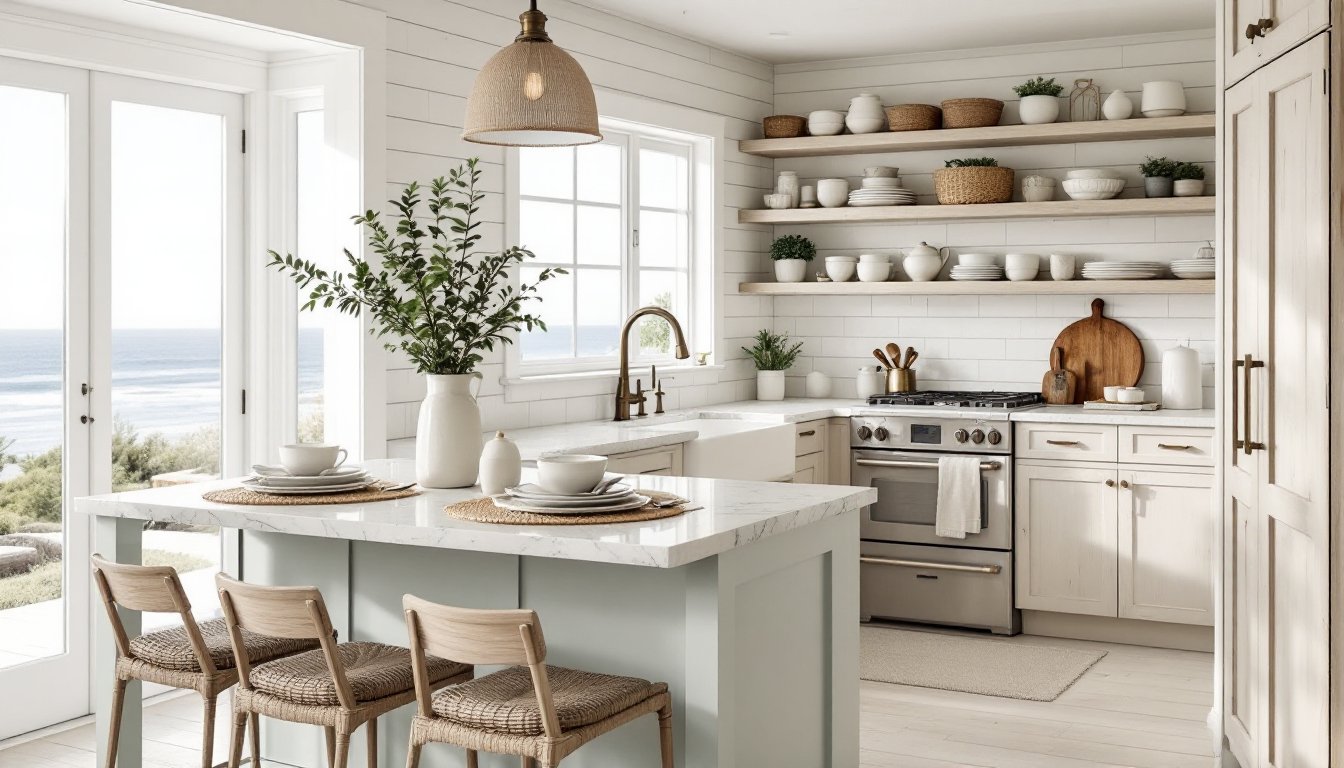
Think of it this way: a coastal kitchen should feel like stepping into a weather-beaten beach cottage, not a resort lobby. That means functionality comes first. Open shelving works well here because it forces you to keep only items you actually use and enjoy looking at. Deep cabinetry painted in soft, muted tones supports the aesthetic while providing practical storage.
The bones of coastal design rest on three pillars: natural light, unfinished or lightly finished wood, and a sense of openness. Clutter is the enemy. Every object in the space should either serve a purpose or bring genuine visual interest. This is why coastal kitchens feel so calm, they’re not fighting for your attention with competing patterns or heavy finishes.
Color Palettes That Evoke the Seaside
Whites, Creams, and Soft Neutrals
The backbone of coastal color schemes is a soft, warm white or cream, not the sterile white of a clinical space, but something with warmth and character. Benjamin Moore’s Swiss Coffee and Sherwin-Williams’ Accessible Beige are workhorse choices because they read as neutral while still having depth.
Walls painted in these tones reflect light and make kitchens feel larger. Pair them with off-white cabinetry (or white with glazed detailing to add subtle dimension). Natural wood countertops or light-toned quartz work beautifully here. The key is avoiding bright whites that feel sterile: aim for whites with undertones of cream, gray, or even the faintest hint of green.
Accent walls aren’t necessary in coastal design. Instead, let texture and layering do the work. A neutral base allows natural wood elements, natural stone, and woven textiles to stand out.
Blues and Aquatic Tones
When color enters a coastal kitchen, it’s almost always blue, but subtle blue, not primary blue. Think soft sage-blue, dusty denim, or seafoam rather than navy or bright turquoise. These colors are inspired by coastal landscapes: shallow water, weathered shutters, and sea glass.
Blue works best as an accent: a few cabinetry sections, a kitchen island, or a single accent wall. Avoid painting every cabinet blue, that’s interior design from ten years ago and can feel dated. Instead, pair a soft blue island with white perimeter cabinets. Or choose white cabinetry with blue tile backsplash in a simple pattern.
Green-tinted neutrals (like whitewashed or soft sage) also fit this palette. These cooler tones tie back to coastal vegetation and create visual depth without clashing with the lighter foundation.
Materials and Textures for Authentic Coastal Appeal
Coastal design lives or dies based on material choices. Authentic coastal kitchens favor natural, weathered, or lightly processed materials over high-gloss finishes and plastic-looking veneers.
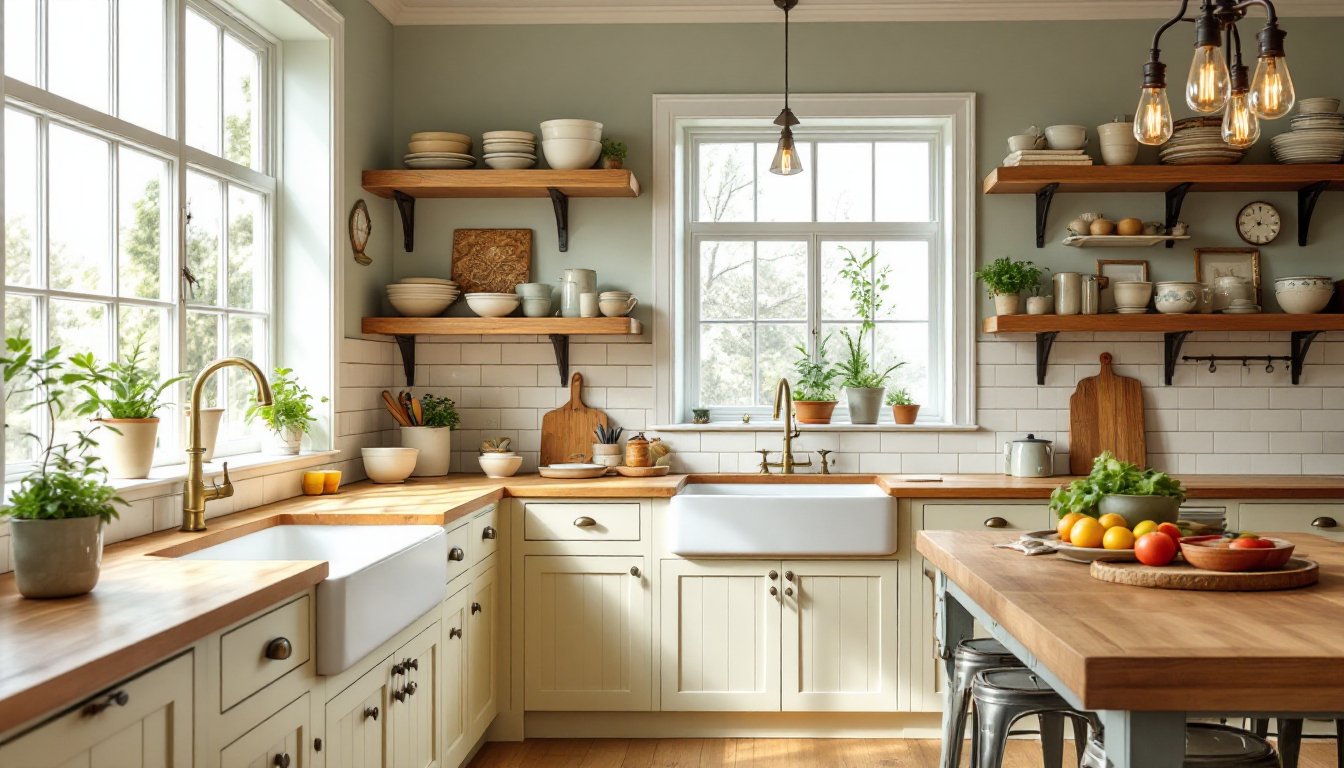
Reclaimed or light wood sets the tone. Shiplap on walls or ceilings is a coastal staple (painted white or soft cream), though it’s not required. Solid wood cabinetry in light oak, pine, or whitewashed finishes feels genuine. Open shelving with natural wood edges works, but confirm the shelves can handle your everyday dishes and glassware without visible sag. Standard 3/4-inch-thick solid wood or quality plywood can span about 24-36 inches depending on load: if you’re uncertain, add a support bracket.
Natural stone and tile ground the space. Granite or marble countertops in white, cream, or pale gray are classic coastal choices. For backsplash, simple white subway tile, larger format tiles, or soft blue glazed tile suit the style. Avoid busy mosaics or glossy finishes that feel too formal.
Textiles and woven accents add warmth without bulk. Natural fiber placemats, linen dish towels, and woven pendant light shades introduce texture. These are cosmetic updates, no installation required, and they’re among the quickest ways to shift a kitchen’s feel.
Hardware and fixtures matter more than many people realize. Opt for brushed nickel, oil-rubbed bronze, or even vintage brass pulls and knobs. These finishes weather gracefully and feel less polished than chrome. Pendant lights with natural linen or woven shades, combined with open frame fixtures, keep the industrial-meets-natural vibe alive. Stainless steel is fine for appliances, but avoid chrome or high-polish finishes on decorative elements.
Lighting and Hardware: Finishing Touches
Lighting is where coastal design really shines. Natural light is non-negotiable, if your kitchen has small or few windows, consider carefully before adding upper cabinetry that blocks daylight. Skylights, larger windows, or glass doors to a patio all amplify the airy feeling coastal design depends on.
For artificial lighting, layer your approach. Overhead fixtures should feel organic and uncomplicated: wrought iron, weathered wood, or brass with fabric shades (linen works perfectly). Avoid recessed lights with chrome trim or sleek modern fixtures that feel too contemporary. Pendant lights over an island or breakfast bar are ideal, they provide task lighting while adding visual interest.
Under-cabinet lighting is practical and subtle. LED strips under shelving or cabinets illuminate countertops without drawing attention. This approach supports the understated philosophy of coastal design.
Hardware deserves its own moment. Cabinet pulls and knobs in brushed nickel, aged brass, or matte black pair well with coastal cabinetry. Vintage-style cup pulls or simple bar pulls feel more authentic than modern minimalist hardware. Faucets should have a similar sensibility: oil-rubbed bronze, brushed nickel, or aged brass finishes with traditional or gooseneck silhouettes work better than polished chrome or ultra-modern geometric designs.
Faucet function matters too. A single-handle or gooseneck faucet simplifies the look and is easier to clean around than a multi-handle setup. If you need to replace a faucet, expect to turn off water supply valves (usually under the sink), disconnect the old unit, and install the new one, roughly a 30-minute job if there are no complications. Many newer faucets fit standard sink holes, but measure your current setup before buying.
Bringing It All Together: Budget-Friendly Coastal Updates
A full coastal kitchen renovation can be expensive, but you don’t need to gut and rebuild to capture the style. Targeted updates deliver impact without very costly.
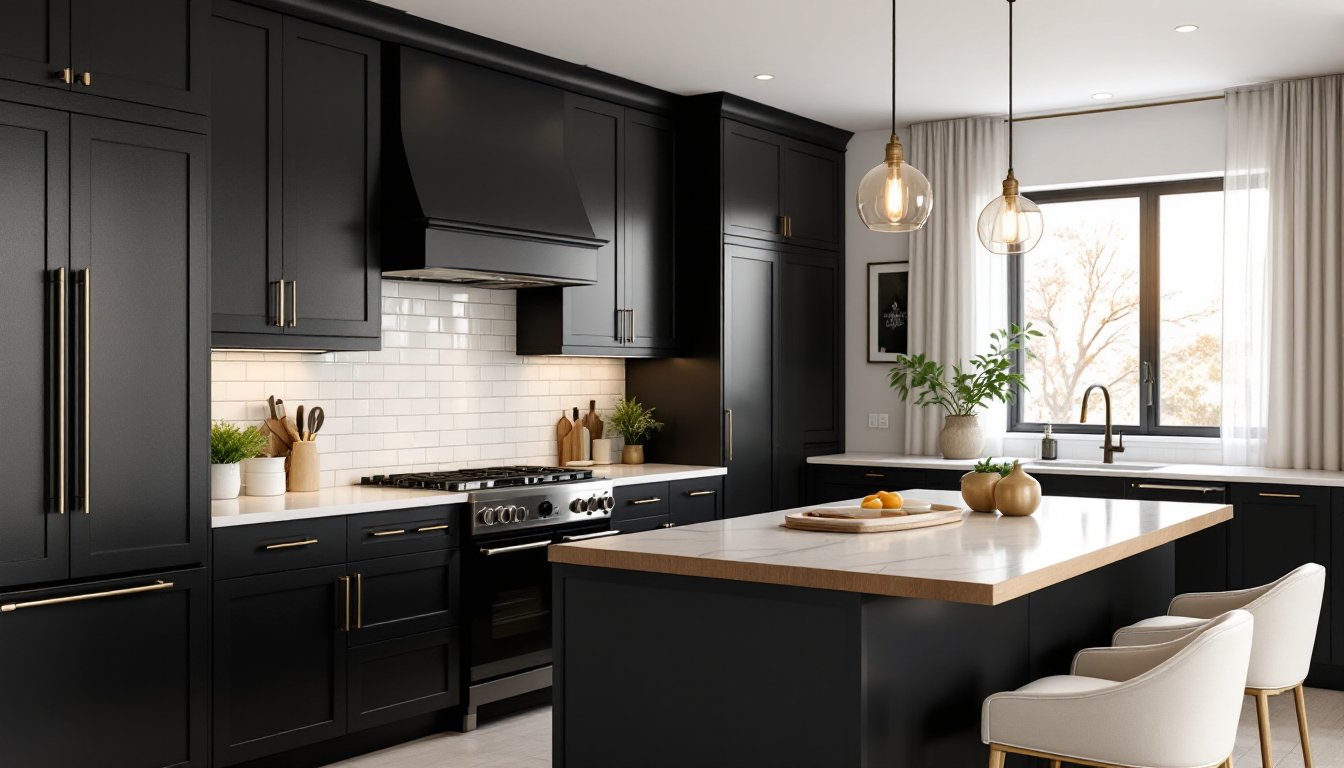
Paint is the cheapest transformation. Cabinet painter-quality primer and two coats of quality cabinet paint (Benjamin Moore, Sherwin-Williams, or similar) can refresh dark cabinetry for $300–800 depending on kitchen size. This is a DIY-friendly project if you’re comfortable with prep work: remove hardware, clean thoroughly, sand lightly, prime, and paint. The real time investment is in prep, not painting. Set aside 3–4 days for drying between coats.
Hardware swaps cost $100–300 but feel like a major upgrade. Browse vintage or farmhouse-style pulls and knobs, then swap your existing hardware. This is a 2-hour project if you’re organized.
Backsplash updates vary wildly in price. A simple subway tile backsplash runs $400–800 for materials and professional installation, though DIYers can save 40–50% on labor. Peel-and-stick tile is an option for renters or those hesitant about permanent changes, though it’s less durable. Read installation guides carefully before committing.
Lighting upgrades ($200–600) feel transformative. A few pendant lights over the island and updated over-sink lighting refresh the entire space. Installation is straightforward if you’re comfortable with basic electrical work (turning off breakers, connecting wires), but hire a licensed electrician if you’re unsure. This is not a DIY corner-cutting area.
Styling and textiles are freebie or ultra-cheap updates: swap out dish towels, add open shelving with your nicest dinnerware, incorporate woven placemats and baskets, and hang simple artwork. These shifts cost under $200 and feel surprisingly impactful.
Start with paint and hardware if your budget is tight. These two moves alone signal the coastal shift. Add lighting and backsplash when resources allow. Layer in textiles throughout, they’re the connective tissue that ties everything together. For a comprehensive guide to kitchen updates, interior design trends guide covers broader design strategies. You might also explore best home renovation ideas to understand which kitchen updates add resale value. If you’re considering a larger overhaul, the home renovation ideas examples show real-world kitchen transformations that blend coastal with other styles.
Real-world inspiration helps too. Platforms like Houzz curate specific coastal kitchen examples with photos and material details. The Kitchn offers practical kitchen design advice and product recommendations. HGTV showcases coastal kitchen renovations that range from budget-conscious to high-end, helping you calibrate your own vision.