Black bathrooms aren’t the moody, cramped spaces they used to be. When done right, black bathroom design ideas create a sophisticated, gallery-like atmosphere that feels both luxurious and inviting. Whether you’re working with a tiny half-bath or a sprawling master suite, a black color scheme offers bold design flexibility. The trick is balancing dark walls and fixtures with smart lighting, materials, and accent colors so the space feels open rather than claustrophobic. This guide walks you through seven practical design approaches to transform your bathroom into a striking retreat you’ll actually want to spend time in.
Table of Contents
ToggleKey Takeaways
- Black bathroom design ideas create a sophisticated, spa-like atmosphere when balanced with strategic lighting, light accents, and natural materials to avoid a cramped, cave-like feel.
- Use matte black finishes over glossy for walls and tiles, and reserve all-black walls for accent areas only—large-format tiles with white or light-colored grout lines help the space feel larger.
- Layer lighting with task lights at vanity level (36–40 inches apart), recessed overhead fixtures spaced 4–6 feet apart, and accent lighting under floating vanities or behind mirrors for a spa-like glow.
- Incorporate contrast through white trim, light gray grout, natural wood elements (walnut or teak), and mixed metals (brass, chrome, nickel) to humanize black bathrooms and prevent visual monotony.
- Start small with budget-friendly updates like accent wall paint (under $50), tile backsplash, or hardware swaps before investing in major renovations like vanity replacement or electrical work.
Creating Drama With Black Walls and Tile
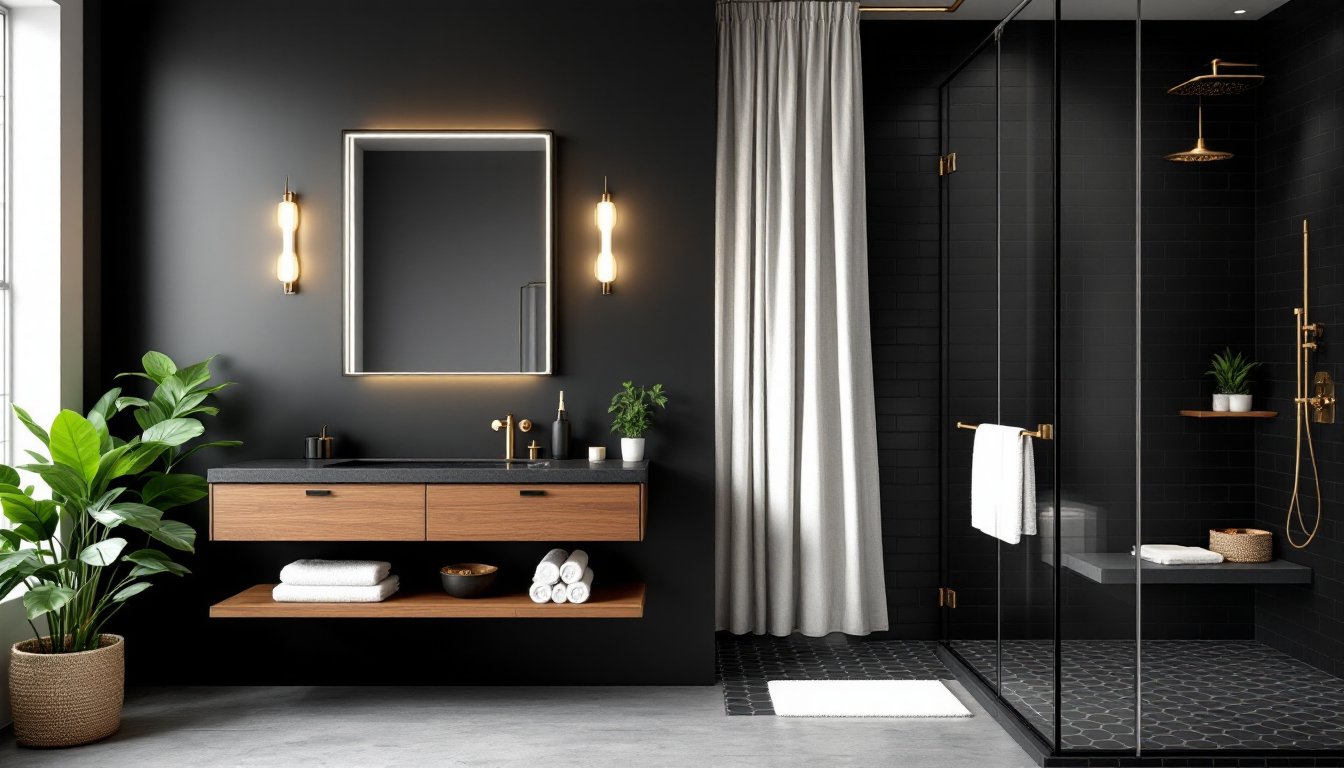
Black walls and tile are the foundation of a dramatic bathroom, but they require thoughtful execution. Start with matte black finishes, they absorb light and create depth, while glossy blacks can feel plastic and cheap. Matte tiles work best on accent walls or in wet zones like shower surrounds: painting all four walls black risks making the space feel like a cave, especially in smaller bathrooms.
For tiling, consider mixing formats and textures. Large-format black tiles minimize grout lines and make walls appear larger: offset them with narrower subway tiles in white or light gray to break up the visual weight. Black hexagonal or octagonal tiles offer geometric interest without adding clutter. In showers, matte black ceramic or porcelain tiles are durable and hide water stains better than glossy finishes.
Prep is critical. Remove old tile carefully, use a grout saw or oscillating multi-tool fitted with a tile blade to cut grout lines before prying tiles loose. Patch substrate holes with cement backer board, not drywall, in wet zones. Apply a waterproof membrane (like Redgard or Schluter systems) over backer board before tiling. Spread thinset mortar with a notched trowel, typically 1/4 inch by 3/8 inch for wall tiles, and let it cure before grouting. Use epoxy grout for black tile: standard cement grout stains easily on dark finishes.
Paint is quicker than tile and lets you test the look first. Use high-quality bathroom-grade paint (semi-gloss or satin) with mildew resistance. Benjamin Moore’s Chalkboard Black or Sherwin-Williams’ Tricorn Black are durable, non-fading choices. Apply primer first, black paint often needs two coats, and primer prevents bleed-through. Proper ventilation and exhaust fans matter more with dark finishes since humidity shows faster on matte surfaces.
Modern Black Vanities: Style Meets Functionality
A modern black vanity anchors the entire bathroom design and serves as the functional workhorse. Black vanities come in three main styles: flat-front minimalist (clean, slab-door designs), shaker-style (classic frames with recessed panels), and statement pieces with interesting hardware or sculptural legs.
Material matters. Solid wood painted or stained black is warm and forgiving: lacquered finishes are sleek but show fingerprints. Engineered plywood with black veneers offers budget-friendly durability. Avoid particle board in bathrooms, humidity causes swelling and delamination over time. A quality 24-inch to 30-inch vanity with adequate storage beats two smaller units that look disconnected.
Countertop selection defines your style and maintenance burden. Solid black quartz (engineered stone) is non-porous, resists staining, and pairs beautifully with black vanities for a monolithic look. Granite or marble add warmth but require sealing and stain care. Concrete tops offer industrial appeal but crack easily and need annual sealing. Tile countertops are budget-friendly but grouting around a sink becomes a mold trap, avoid this if possible.
For plumbing, standard 3-inch or 4-inch centers are typical: measure your supply lines before buying to avoid expensive modifications. Modern wall-mounted vanities save floor space but require solid wall framing and plumbing rough-in planning, this isn’t a beginner DIY task. Floating vanities expose the wall, so finish it with paint or tile before installing the vanity. Use a stud finder to locate wall studs, then install heavy-duty floating brackets rated for at least 200 pounds. Your vanity also connects to interior design trends ideas shaping how bathrooms function in modern homes.
Lighting Solutions That Elevate Black Bathroom Spaces
Lighting is non-negotiable in a black bathroom, without it, the space collapses into murk. Plan for layered lighting: task (vanity mirrors), ambient (overhead), and accent (recessed or decorative).
Vanity lighting should flank the mirror at eye level, approximately 36 to 40 inches apart, with bulbs rated 2700K to 3000K (warm white). This mimics natural daylight without the yellow cast. Avoid a single overhead fixture directly above the mirror, it creates harsh shadows on the face. If you’re mounting vintage or brass fixtures against black walls, they’ll pop like jewelry: polished nickel or matte black fixtures disappear visually, creating a clean, modern look.
Overhead lighting works best as recessed fixtures (6 inches inset into the ceiling) spaced evenly across the room. Plan for one fixture every 4 to 6 feet for even coverage: skip a center pendant in black bathrooms unless it’s a statement piece, it can feel too heavy. Dimmer switches let you adjust ambiance without adding fixtures.
Accent lighting softens the darkness. LED strip lighting under floating vanities, along shelving, or behind mirrors adds warmth and makes the space feel larger. Backlit mirrors are trendy and practical, they eliminate shadows and create a spa-like glow. Ensure fixtures are rated for damp or wet locations (UL/ETL listed) if installed near showers.
Electrical work, adding new circuits, moving outlets, or installing dimmer switches, typically requires a licensed electrician and permit, especially if you’re running new cable in walls. Hire a pro if you’re not confident. HGTV’s design resources showcase lighting strategies across dozens of black bathroom renovations worth studying.
Balancing Dark Tones With Light Accents and Fixtures
Black alone reads as harsh and funeral. The antidote is contrast, light accents break the visual weight and create breathing room. White subway tile trim, light gray grout lines, or pale limestone accents work instantly. White or cream-colored towels, robes, and bath mats add softness without requiring construction work.
Fixtures provide another layer of balance. Chrome or brushed nickel pulls against black vanities create clean contrast. Brass or gold fixtures warm up the space: black fixtures (matte or gloss) reinforce the monolithic aesthetic but risk visual heaviness if overdone. Mix metallics, brass hardware on black vanity, chrome faucet, nickel mirror frame, for a curated, intentional look rather than a matchy aesthetic.
Wood tones inject warmth into black bathrooms. Warm walnut floating shelves, a teak shower bench, or natural wood framing around the mirror humanize the space. Avoid light oak: it clashes with black. Dark wood (walnut, espresso, ebony stains) echoes the black without looking monotone.
Accessories are cheap insurance against a sterile look. Woven baskets (in tan, sisal, or natural fibers), a potted plant, or linen textiles add organic texture. Keep it minimal, three to five accessories max. Interior design trends examples show how successful black bathrooms layer materials and metals rather than relying on one single accent color.
Glass, especially frosted or smoked glass, adds sophistication. A black-framed shower enclosure with clear glass creates definition without visual bulk. Smoked glass shelf brackets or a smoke-tinted mirror soften the severity of pure black-on-black.
Incorporating Natural Materials for Warmth
Black bathrooms demand textural variety to feel inviting. Natural materials combat the coolness of black finishes and prevent the space from feeling like an airport bathroom. Stone, wood, and fiber materials create a lived-in, intentional vibe.
Stone works on multiple fronts. Black marble or slate walls introduce veining and color variation that pure black paint cannot. Limestone, travertine, or granite accents (in shower surrounds, as a vanity top, or on a single feature wall) echo earth tones. These stones require sealing, standard penetrating sealer annually for marble, every two to three years for granite. Budget for maintenance: it’s part of the aesthetic commitment.
Wood elements warm any black bathroom instantly. Teak is naturally mildew-resistant, making it ideal for shower benches, slatted shelving, or floating shelves above the toilet. Douglas fir or cedar add rustic charm but require regular oiling (annually with teak oil or linseed oil) to prevent graying. Avoid untreated softwoods in wet zones: they’ll rot within 2-3 years.
Natural fiber adds tactile warmth without construction. Jute or seagrass baskets under a vanity, linen or cotton towels, and woven shower curtains (paired with a waterproof liner) soften hard black surfaces. Linen is durable and improves with age: cotton is softer and easier to wash. Hang towels on wooden or brass racks, not chrome, which feels institutional alongside natural materials.
Plants improve air quality and add life. Pothos, snake plants, and bamboo palm tolerate bathroom humidity. Place them on floating shelves or in corners where they won’t get sprayed constantly. They need indirect light, but black walls absorb so much light that even low-light plants may struggle, consider a small grow light if natural bathroom windows are limited. Homedit’s curated design inspiration includes numerous black bathrooms featuring stone, wood, and plant arrangements worth referencing.
Budget-Friendly Black Bathroom Updates You Can DIY
You don’t need a $15,000 reno to pull off a sophisticated black bathroom. Start small and layer improvements.
Paint only. A single accent wall in matte black paint costs under $50 (paint and primer). Paint the wall behind the vanity or the shower surround. Two coats on a 50-square-foot wall takes a weekend. Use painter’s tape, a roller for large areas, and a brush for corners. Bathroom paint must resist mildew, buy semi-gloss or satin finish, not flat.
Tile accents. Replace just the backsplash behind your vanity with black subway or hexagonal tiles. A 3-foot by 2-foot area costs $40 to $80 in materials (tiles, thinset, grout). Remove old tile with a grout saw and oscillating multi-tool, clean substrate, apply thinset, set tiles, and grout after 24 hours. Grout lines in 1/8 inch or 1/4 inch width are standard: narrower lines hide imperfections better on DIY work.
Hardware and fixtures. Swap out cabinet pulls, towel racks, and a faucet. New hardware costs $15 to $40 per piece and takes minutes to install with a screwdriver. A basic faucet replacement (if supply lines align) takes an hour. Shut off water at the valve, disconnect the old faucet, apply plumber’s putty, install the new one, and tighten supply lines. Don’t overtighten, hand-tight plus a quarter turn prevents cracking.
Lighting. Add recessed lights or a new vanity light if you’re comfortable with electrical basics. If you’re not, hire an electrician. A single recessed fixture costs $30 to $60 installed (if existing wiring is near), or $150 to $300 for an electrician. Dimmer switches ($15 to $30) are straightforward if you’re replacing an existing switch.
Textiles and accessories. New towels, a shower curtain, bath mat, and mirror ($100 total) transform the look instantly. Washable, durable fabrics in white, cream, or soft gray complement black beautifully.
Major work, removing tile, moving plumbing, installing new vanities, electrical rewiring, should go to licensed pros. Know your limits. A $200 mistake in tile removal or plumbing costs thousands to fix.
Conclusion
Black bathrooms deliver sophistication when you balance dark walls and fixtures with light accents, smart lighting, and natural warmth. Start with a clear vision, pick one or two main design ideas from this guide and build around them. Prep work, material selection, and lighting matter far more than budget. A thoughtfully designed black bathroom feels like a spa retreat, not a dungeon. Begin small, layer intentionally, and don’t skip the details.