White bathrooms aren’t just trending, they’re timeless. Whether you’re starting from scratch or refreshing what you have, white bathroom design ideas offer a clean canvas that feels larger, brighter, and more spa-like than darker palettes. The trick isn’t picking white and calling it done: it’s layering finishes, textures, and strategic accents to avoid a sterile look. This guide walks you through the practical decisions, from fixture selection to paint choices, that transform a basic bathroom into a serene retreat. You’ll learn where to invest, where to save, and how to dodge the bland white box trap that catches many DIYers off guard.
Table of Contents
ToggleKey Takeaways
- White bathroom design ideas succeed through layered textures, finishes, and accents rather than relying on a single shade of white to avoid a sterile, bland appearance.
- Choose gloss or semi-gloss white fixtures and glazed ceramic tile to maximize light reflection and create a brighter, more spacious feel.
- Use moisture-resistant paint rated for bathrooms with semi-gloss or satin finishes, and select epoxy grout over standard cement grout to prevent staining and mold in wet areas.
- Introduce subtle accent colors using pale grays, soft blues, warm wood, and coordinated metal finishes while keeping accents to roughly 20% of the overall design.
- Layer lighting with vanity-side fixtures, dimmable overhead recessed lights, and accent lighting using warm 2700K LED bulbs to maintain a spa-like atmosphere rather than clinical feel.
- Plan storage solutions like floating shelves, built-in niches, and enclosed cabinetry that blend seamlessly into the white scheme to prevent a cluttered, dingy appearance.
Maximizing Light With White Fixtures and Finishes
White reflects light, period. A white vanity, subway tile walls, and bright fixtures multiply whatever natural and artificial light you have. Start by choosing fixtures with high gloss or semi-gloss finishes, matte white reads darker and dingy by comparison.
When selecting a white vanity, distinguish between painted wood, laminate, and solid surface materials. A painted wood vanity requires primer and water-resistant enamel paint rated for bathrooms: cheap finishes peel and stain within two years. Laminate holds up better in moisture-heavy zones but can’t be repaired if damaged. Solid surface (like Corian) costs more upfront but resists water damage and scratches.
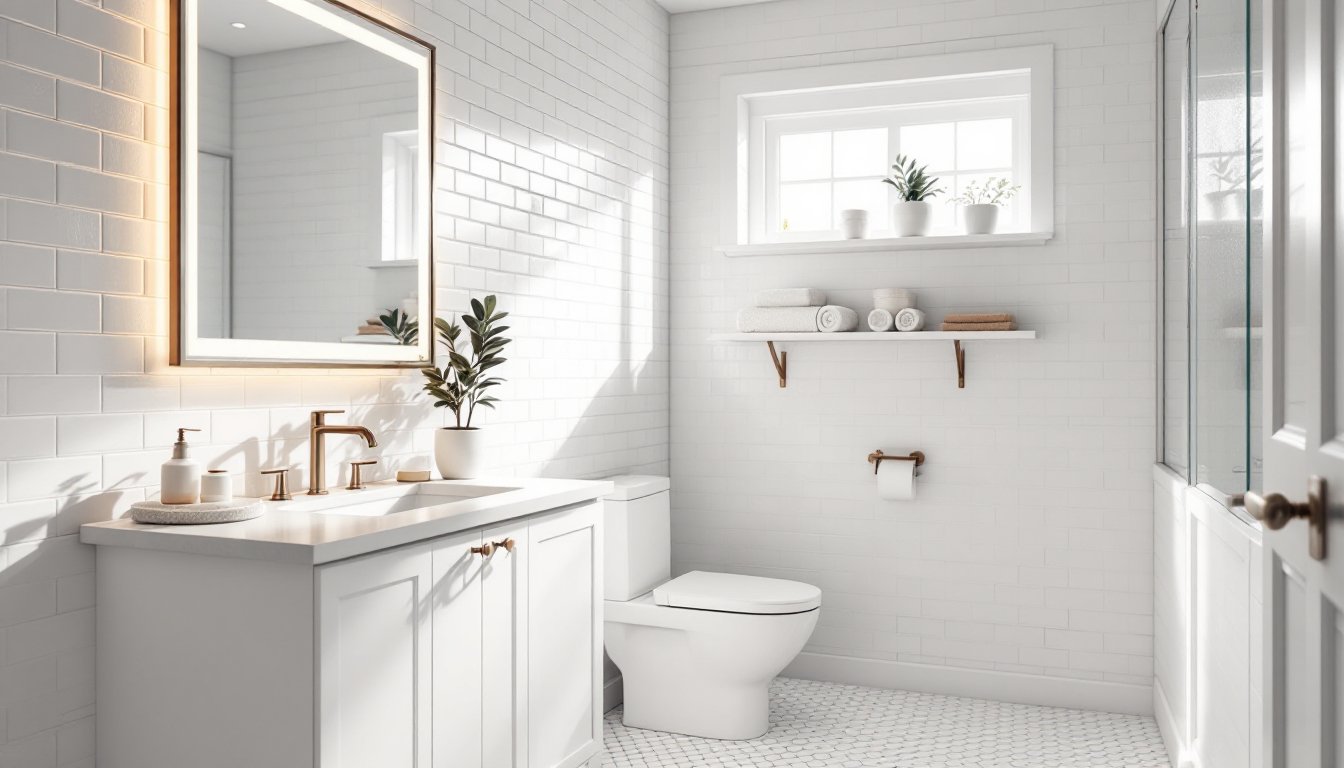
White subway tile is the workhorse here. Standard 3×6-inch glazed ceramic tile bounces light effectively. Lay it in a running bond (offset rows) rather than a grid pattern, it feels less clinical and hides grout lines better. Use a white or light gray grout: dark grout with white tile creates harsh visual lines that shrink the space.
For the toilet and sink, stick with bright white porcelain or vitreous china. These materials age better than cheaper ceramic and resist staining. If your bathroom gets strong natural light, consider a white bathroom design guide to see how professionals handle gloss levels and fixture placement for maximum brightness.
Layering White Textures for Visual Interest
Pure white everywhere reads flat and cold. Layer different textures and tones to add depth. Think ivory, cream, soft gray, and barely-there warm whites alongside your bright whites.
Mix matte and gloss surfaces. Pair a gloss-finished subway tile wall with a matte white paint ceiling. Use textured tile in one zone, natural stone like white marble or limestone adds subtle variation. Subway tile feels sleek: a basketweave or herringbone pattern in white tile breaks monotony without introducing color.
Incorporate natural materials like white or light oak wood shelving, white marble accents, and soft linens. A white shaker-style vanity with brushed nickel or chrome hardware adds tactile interest. Wood trim, even if painted white, gives warmth that pure glossy surfaces can’t.
Don’t shy away from subtle pattern. Small white-on-white geometric floor tile or a delicate white tile border above the vanity catch the eye without clashing. Interior design trends increasingly emphasize layered textures over flat color blocks, so you’re aligning with what’s working elsewhere in homes right now.
For walls above tile, consider beadboard or shiplap painted white with a semi-gloss finish, it’s practical, wipeable, and adds visual texture. Keep patterns subtle: a busy white-on-white design crowd the space and defeats the calm you’re after.
Choosing the Right White Paint and Materials
Not all whites are equal. Paint color undertones matter tremendously in a bathroom. Cool whites have blue or gray undertones: warm whites lean toward ivory or cream. Hold paint samples on your actual walls at different times of day, artificial light shifts how white reads.
For bathrooms, always use paint rated for high-moisture environments. Look for labels specifying “mildew-resistant” or “bathroom & kitchen.” Semi-gloss or satin finishes outperform flat or eggshell in humidity. A semi-gloss bathroom paint withstands moisture and wipes clean. Apply a quality primer first, cheap primer doesn’t seal properly and leads to staining and mold.
Lumber: If building shelving or trim, standard 1×10 pine (which measures 0.75 inches thick and 9.25 inches wide) takes paint well. Seal it with a water-resistant sealant before painting to prevent warping from humidity. Avoid MDF in bathrooms: moisture makes it swell and deteriorate.
Tile: Glazed ceramic tile resists moisture better than unglazed. Porcelain is denser and less porous than ceramic, making it ideal for shower surrounds. Ensure proper waterproofing behind tile, use a cement-based mortar and waterproof membrane, not caulk alone. Caulk flexes: mortar doesn’t, and the gap between tile and substrate is where water sneaks through.
Grout: Use an epoxy or urethane grout rather than standard cement grout in wet areas. Epoxy resists staining and moisture far better. Standard grout absorbs water and can harbor mold over time.
Accent Colors That Complement White Bathrooms
White is forgiving, but it needs a partner. Soft grays, pale blues, warm woods, and muted greens complement white without overpowering it. Think 80% white, 20% accent.
A pale gray accent wall behind the vanity or one side of the shower establishes focus without noise. Gray grounds a space and feels current. Pale blue evokes spa and water themes naturally, use it as a feature wall or through towel and accessory choices rather than major surfaces. Warm wood (oak, walnut) in vanity frames or shelving adds richness without color.
Metal finishes are color too. Brushed nickel and chrome feel cool and contemporary. Oil-rubbed bronze or aged brass lean warmer and vintage. Pick one and stick with it for fixtures, hardware, and light frames. Mixing too many metal finishes looks scattered.
Live plants add organic green without the commitment of painted walls. A potted fiddle-leaf fig or snake plant in a corner brings life and visual relief. Many homeowners find home renovation ideas incorporating small greenery create an unexpectedly spa-like feel in white bathrooms.
Avoid loud accent colors, neon, saturated tones, or heavy jewel tones fight white and clutter the calm aesthetic you’re building. If you want bolder color, introduce it through removable elements like a shower curtain or bath mat rather than permanent fixtures.
Storage Solutions That Blend Into White Design
A cluttered white bathroom looks dingy fast. Plan storage that vanishes visually into the white scheme.
Floating shelves painted white above the toilet create open storage without bulk. Use bracketing rated for your wall type, drywall alone won’t hold shelf weight: anchor into studs or use heavy-duty toggle anchors. Standard floating shelves are 8-12 inches deep: smaller bathrooms benefit from 8-inch depth to avoid narrowing the space.
Built-in niches in shower walls (recessed into the wall cavity) hold soaps and shampoos without protruding. If your walls are already tiled, retrofitting a niche requires cutting tile and reopening the wall, often not worth the disruption. Plan these during initial construction or major tile work.
A white medicine cabinet with mirrored doors doubles as storage and reflection. Frame it in white or brushed nickel to stay cohesive. Wall-mounted towel bars in the same finish as other hardware tie the look together.
Closed cabinetry below the vanity hides clutter. Open shelving under a console sink looks airy but requires disciplined styling, everything showing must coordinate with your white and accent palette. If you’re not naturally organized, stick with enclosed cabinets.
Drawer dividers and labeled containers keep visible shelves neat. Clear acrylic or white ceramic caddies hold cotton balls, q-tips, and medications without adding visual noise. Interior design sources emphasize that clean storage is as important to white design as the color palette itself.
Lighting Strategies to Enhance Your White Bathroom
White amplifies light, but poor lighting placement turns it clinical. You need layered illumination: overhead, vanity, and accent light.
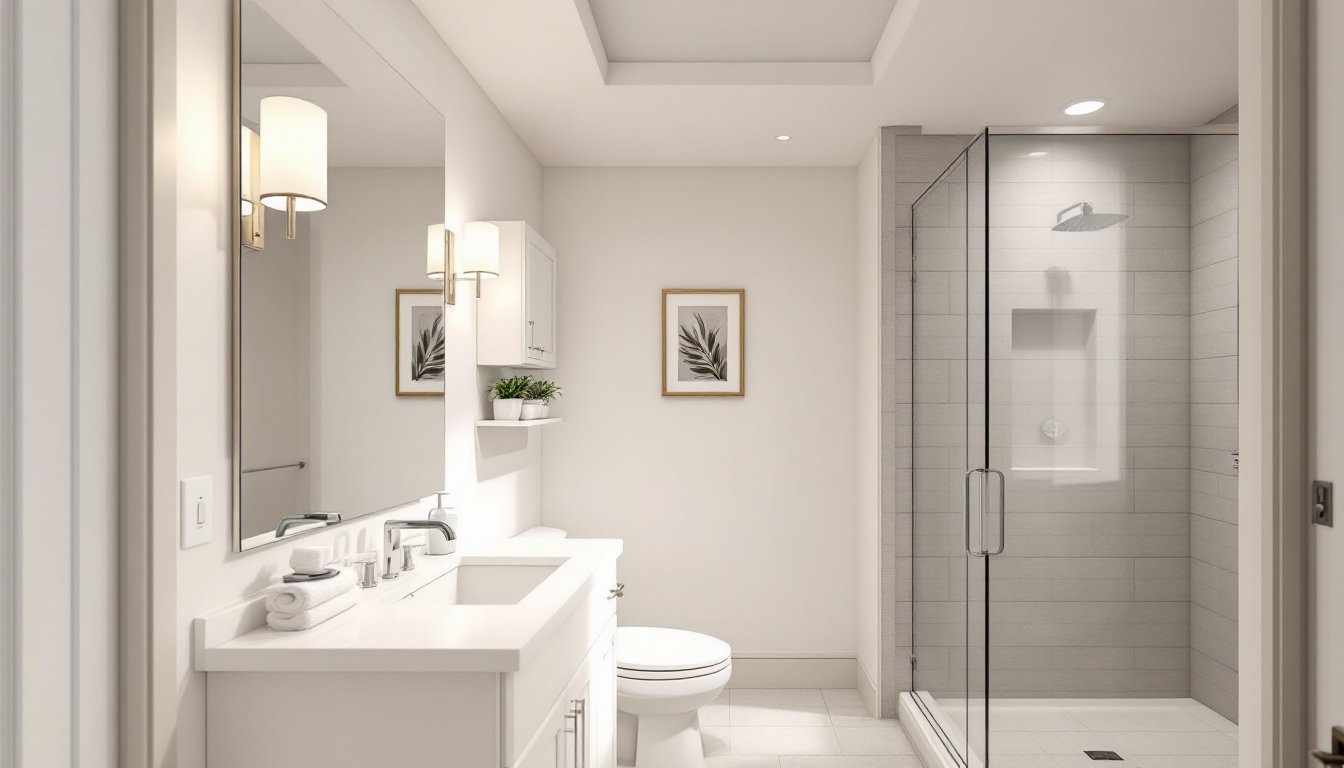
Vanity lighting is non-negotiable. Mount a linear LED strip or frosted globe fixtures (each 40–60 watts equivalent) on either side of the mirror, not above it. Side lighting eliminates shadows on your face and feels spa-like rather than interrogation-room harsh. If you need overhead light, use a dimmable fixture so you can adjust mood and avoid glare on white surfaces at night.
Ceiling-mounted recessed lights (4-inch trim is standard in residential bathrooms) should be on a dimmer switch. This lets you go bright for cleaning or getting ready, then soft for evening wind-down. Space them 4-6 feet apart for even coverage without hot spots.
Accent lighting matters. A small dedicated light above the toilet or within a niche adds layered interest without functional overhead glare. Low-level wall sconces (12-18 inches high) flanking the sink create a warm secondary glow.
Color temperature affects how white reads. Use 2700K (warm white) LED bulbs for a spa-like feel: 4000K (neutral) or 5000K (cool white) feels clinical and institutional. Warm light is flattering and relaxing. Most big-box stores stock GU10 or E26 base LED bulbs in dimmable versions, verify compatibility with your fixtures before buying.
Wiring code (NEC Article 210) requires GFCI-protected outlets in bathrooms. Verify any new fixture installation meets local electrical code. If you’re not confident with wiring, hire a licensed electrician. Damp environments and electricity don’t forgive mistakes.
Conclusion
White bathrooms succeed through intentional choices, not accident. Layer textures, respect undertones in paint, invest in moisture-resistant materials, and pair white with thoughtful accents. Proper lighting and hidden storage keep the space feeling serene rather than sterile. With these strategies in place, you’ll have a bright, spa-like retreat that welcomes you each morning and calms you before bed. Design inspiration is everywhere, but remember: your white bathroom should reflect how you live and what makes you feel restored.